
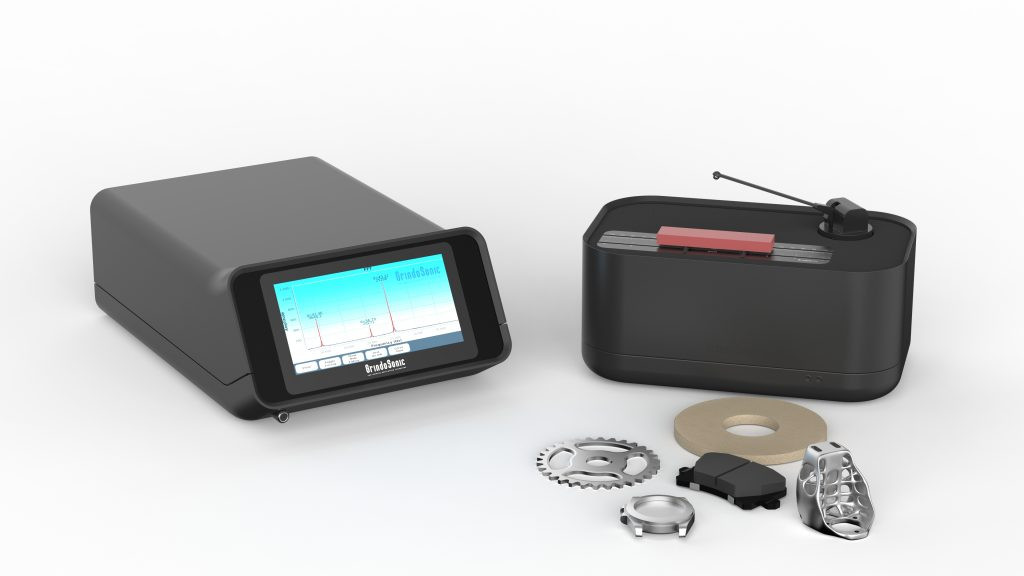
Core applications for the Impulse Excitation Technique include:
| Materials Characterisation
In R&D, the ability to understand internal material characteristics without damaging your sample is priceless. The GrindoSonic MK7 tool measure Young’s and Shear modulus, Poisson’s ratio and Internal Friction of materials in a fast, accurate and non-destructive way. Researchers can either test directly on finished parts, or where suitable they can make identical test-bars out of different materials and then easily compare based on the resonant vibrations measured inside the bars using the GrindoSonic tool. |
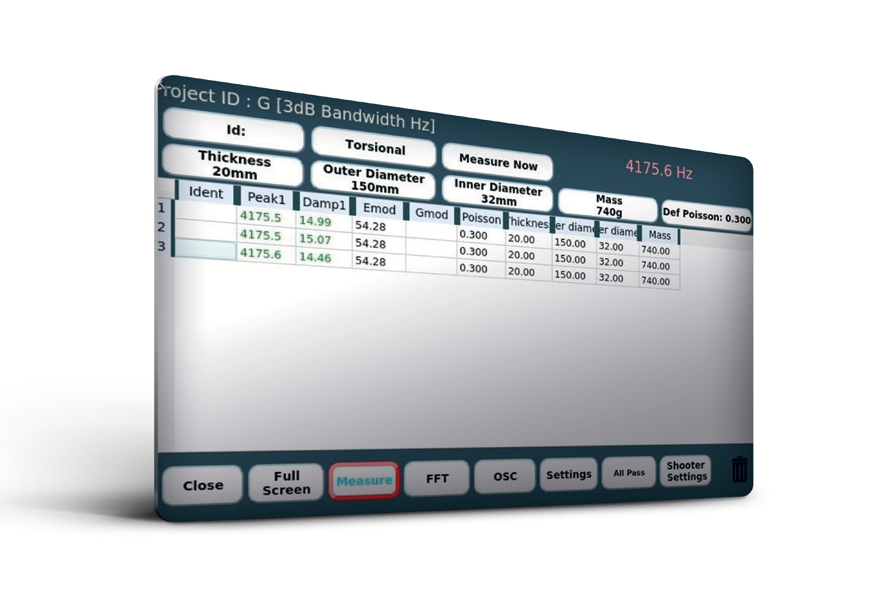 Grindosonic MK7 – Resonance based non-destructive testing – Materials characterisation |
| Ageing, Fatigue Testing
Because samples are not damaged during testing they can be tested time and time again. This is highly useful in applications where the evolution of material properties over time is critical. This could be used where a researcher wants to understand how a material ages over time, or when repeat testing parts to understand how they fatigue in real world situations.
|
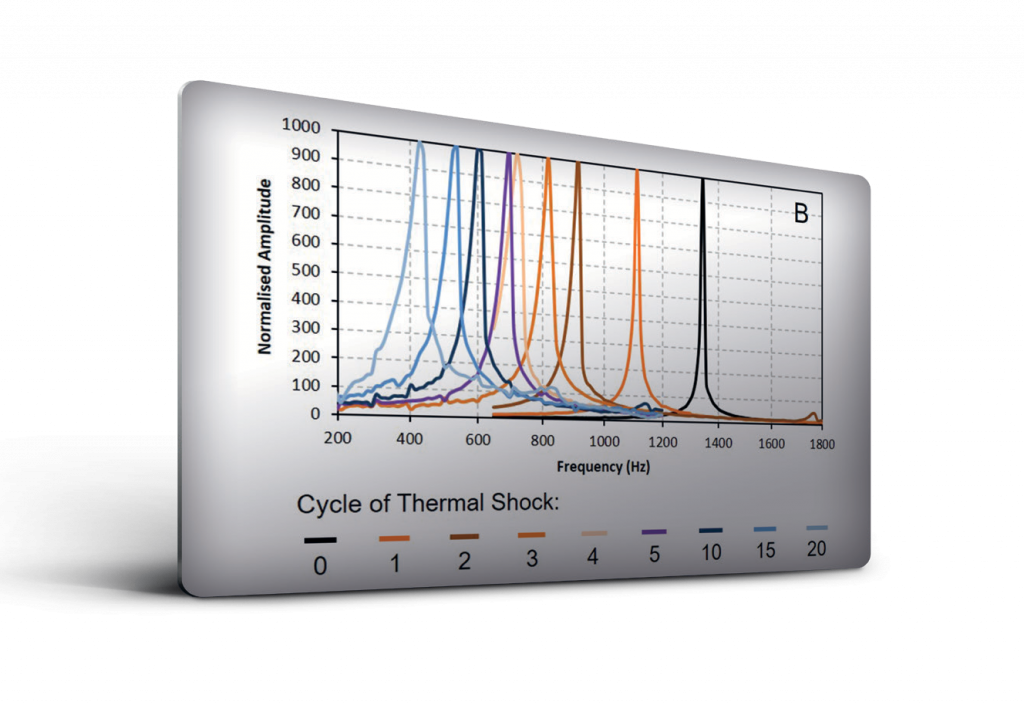 Grindosonic MK7 – Resonance based non-destructive testing – Aged, fatigue testing |
| Detection of Micro-Cracks & Porosity
Micro-cracks inside a product are invisible to the naked eye and even under a microscope, but they will have a direct impact on the damping of the resonance vibration. Therefore internal cracking can be characterised using the GrindoSonic MK7 tool.
|
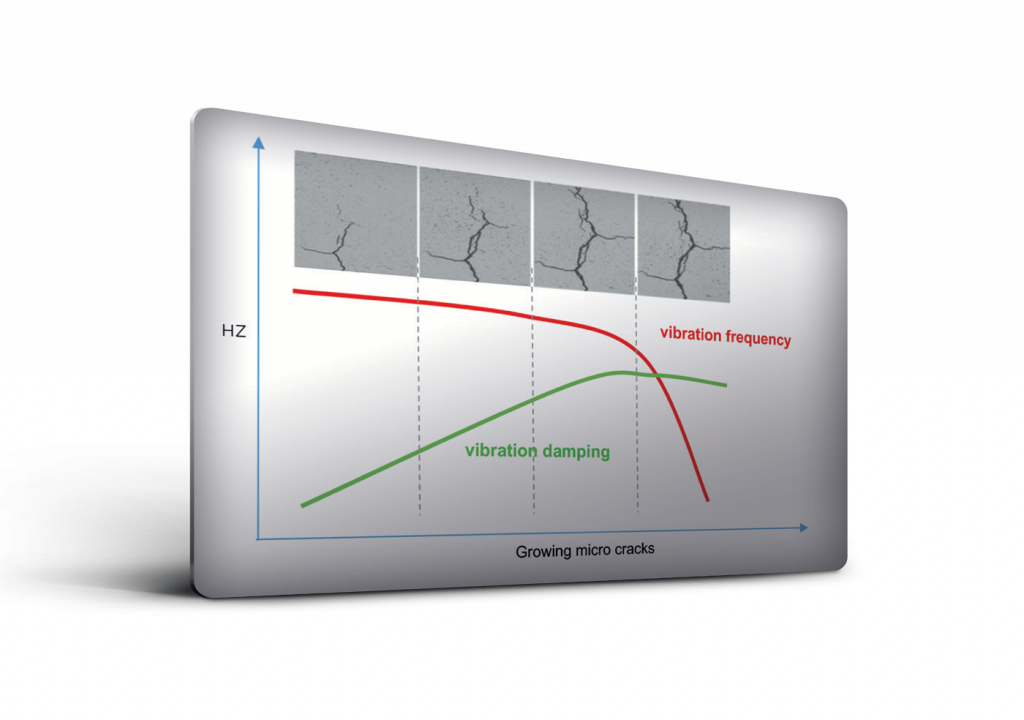 Grindosonic MK7 – Resonance based non-destructive testing – Detection of micro cracks and porosity |
| Asymmetry
Symmetric parts like tubes, cylinders or discs can be tested to quantify their asymmetry. Asymmetry is typically caused by geometric instability e.g. ovality, variations in density over the object, presence of internal defects like cracks, voids etc. The distance between two frequency peaks (delta) is a metric for the asymmetry. |
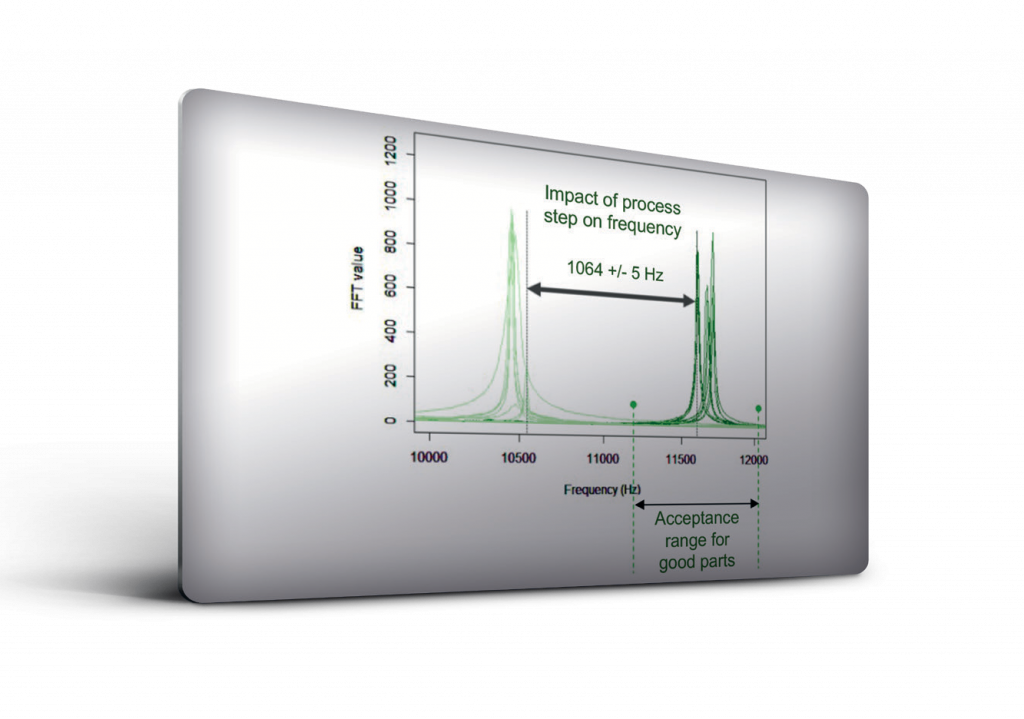 Grindosonic MK7 – Resonance based non-destructive testing – Asymmetry |
| Quality Control
The Impulse Excitation Technique is a fantastic way of quality controlling parts without needing to damage them in any way. When causing a sample to resonate and measuring the frequency and damping the GrindoSonic MK7 is able to fingerprint a part. Therefore if other parts are exactly the same they should produce this exact same fingerprint when tested. Any deviation from this fingerprint indicates something in the part that is different, and therefore a quality control fail. Using this method in quality control is fast, non-destructive and absolutely reproduceable.
|
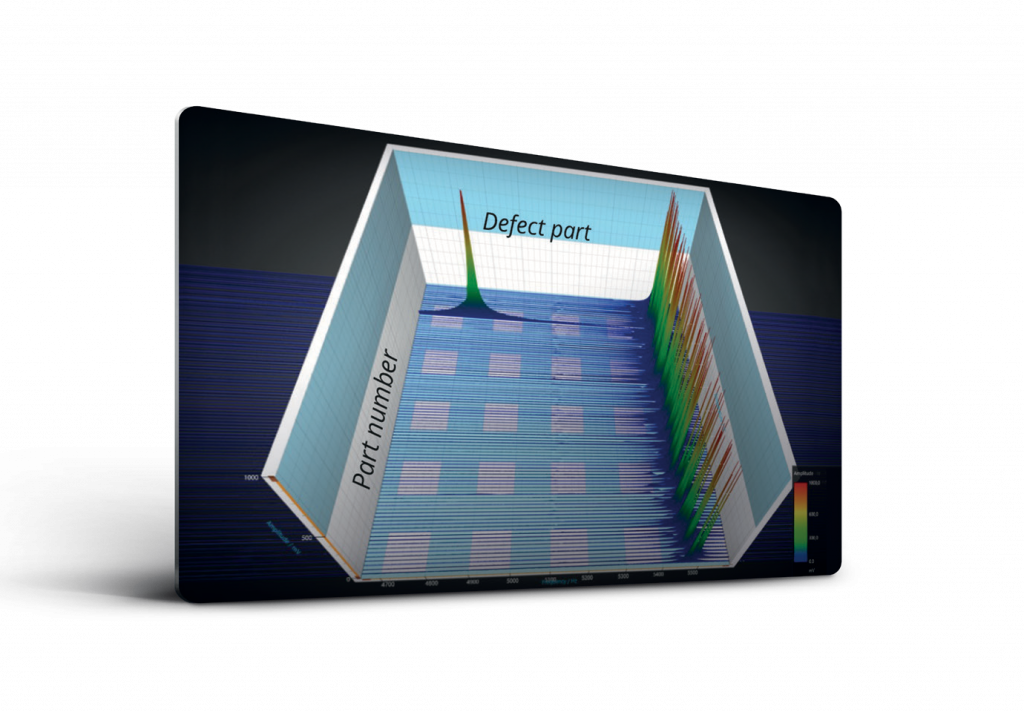 Grindosonic MK7 – Resonance based non-destructive testing – Quality control |
|
Process Control and Optimisation When finetuning a process, visual inspections or surface testing may not tell us anything about changes to the end product. With the GrindoSonic technique engineers can detect changes to the internal properties of a sample and therefore understand more about changes in material performance. For example, a frequency drop might indicate a change in stiffness, hardness or porosity, whilst an increase in dampening could indicate the presence of cracks. The absence of a frequency all together could indicate a broken particle or internal stress. |
Grindosonic MK7 – Resonance based non-destructive testing – Process control and optimisation |
