Viscoelastic materials display both elastic and viscous behavior when stressed. Unlike purely elastic materials, which deform instantly and recover fully, or purely viscous ones, which deform gradually over time, viscoelastic materials show a combination of both, measurable through a complex modulus.
Tires constantly endure repeated deformations on the road. Their lifespan is affected by tread wear, heat from friction, and rubber aging. To address this, tires are built with layered composites—carbon-reinforced rubber, nylon cords, and steel belts—each layer optimized for specific functions such as wear resistance, cushioning, or structural support.
Testing the viscoelastic properties of rubber is crucial for tire design, quality assurance, and predicting durability. Techniques like Dynamic Mechanical Analysis (DMA) with nanoindentation apply controlled oscillatory stress and measure resulting strain, providing precise data on a material’s viscoelastic performance.
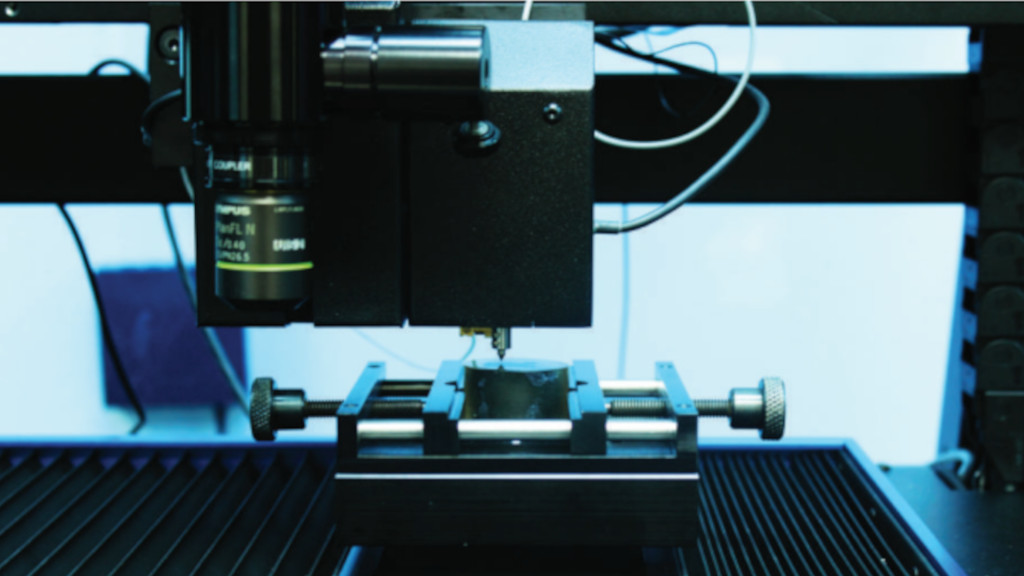
In this application note Nanovea use their PB1000 mechanical tester in Nanoindentation mode with DMA to study the viscoelastic properties of rubber at different thicknesses of a tire sample.
40 nanoindentation DMA tests were performed along the thickness of a tire sample and the distribution illustrated in graphs. Indents were spaced 0.38mm apart for a total distance of 15.5mm and the corresponding Tan(δ), Storage Modulus, Loss Modulus and Hardness reported.
You can view the full application note here or you can request a pdf copy of this application note by clicking the Request Application Notes link below.