Radon Dosimetry
Long term exposure to radon increases your risk of cancer, in particular lung cancer. Radon produces a radioactive dust that is inhaled and trapped in our airways. This in turn emits radiation that damages the inside of our lungs.
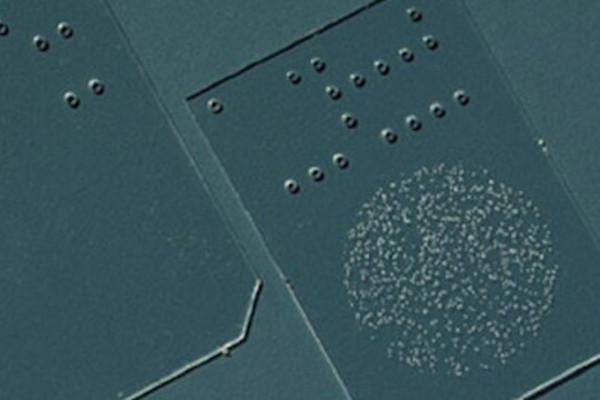
Our radon dosimeters (also known as radon dosemeters) are used inside passive radon detectors. The detectors are placed in areas at risk of radon exposure and left for a period of time (typically 3 months). During this time the surface of the radon dosimeter plastic will be marked and pitted by radioactive particles. After the period of time is completed the radon dosimeter plastic is etched and then analysed under a microscope and the pits measured and counted. The more pitted and damaged the plastic the higher the exposure to radon.
Neutron Dosimetry
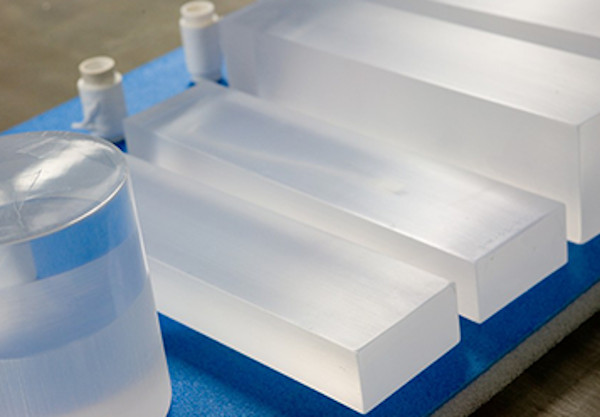
Our neutron dosimeter plastic (also known as neutron dosemeter plastic) is used in the detection of thermal, epithermal and fast neutrons. It is insensitive to other radiations (gamma, X and beta), is relatively unaffected by heat and humidity and has a very low radon sensitivity. Typically worn as a badge for personal neutron dosimetry the plastic is damaged by charged particles which create tracks across it’s surface. In personal neutron dosimetry these charged particles are mostly protons that are produced in interactions between the neutrons and the nuclei of the PADC.
As with radon dosimetry the neutron detector badges are worn over a period of time after which they are etched and all pits and tracks automatically counted by microscope.
Specific advantages of our neutron dosimetry plastic are:
- Insensitive to other radiation types such as X-ray, gamme or beta radiation.
- Low sensitivity to radon (see radon dosimeters for plastic specifically formulated for radon dosimetry).
- Good life span allowing issue periods of up to 3 months.
- Relatively unaffected by heat and humidity.
- Able to detect neutrons across a very wide energy range.
- Physical record of exposure as plastic can be stored for years afterwards.
Other Applications
Neutron and radon dosimetry are two of the main applications of our plastic, however it is also used in other applications such as plasma physics, laser physics, uranium research, astronomy, radiography and teaching. If you have a specific application that requires bespoke material please contact us and we will be happy to work with you.