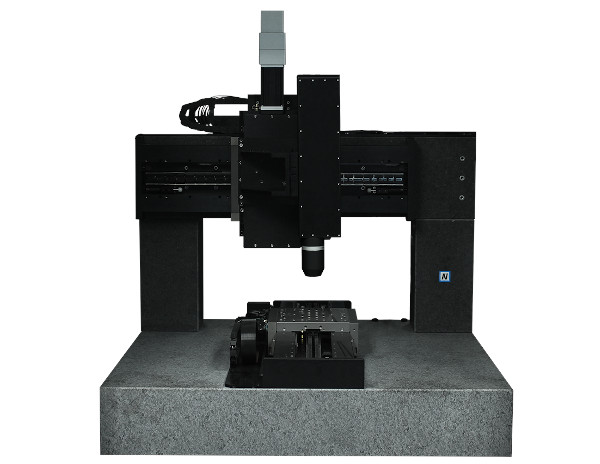
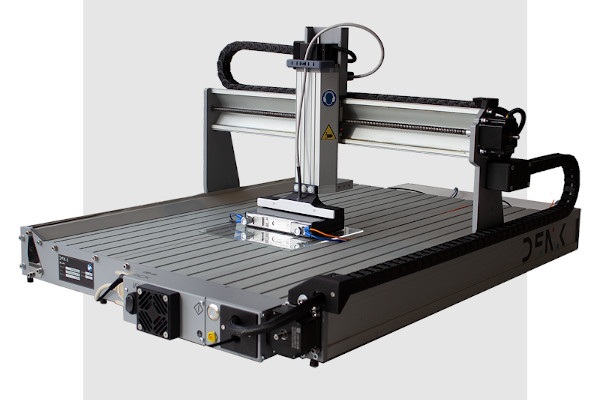
The DENKweit B-LAB is a desktop tool for measuring the direction and strength of electrical currents. It is easy to use, fast,  non- contact and does not require the user to apply an electrical current during measurement. Data is highly precise, quantitative and in real time so hand held and in-situ options are also available.

The B-LAB can be combined with the DENKweit AI software DENKnetze to automatically identify faults and features. DENKnetze is affordable and easy to use.

DENKweit from Halle Germany are an award winning 2018 spin out from the Fraunhofer Institute. Their innovative Magnetic Field Imaging technology combined with their own AI solution DENKnetze has already been sold to a number of world renowned companies and institutes across a variety of applications.

DENKweit B-LAB

Key Features

  • Quantitative magnetic field imaging
  • Non-contact and in real time
  • User friendly DENKweit platform with advanced data visualization and analysis
  • Can be combined with DENKnetze AI software
  • Hand held and in-situ options available

Application Examples

The DENKweit technology is used across a variety of different applications.
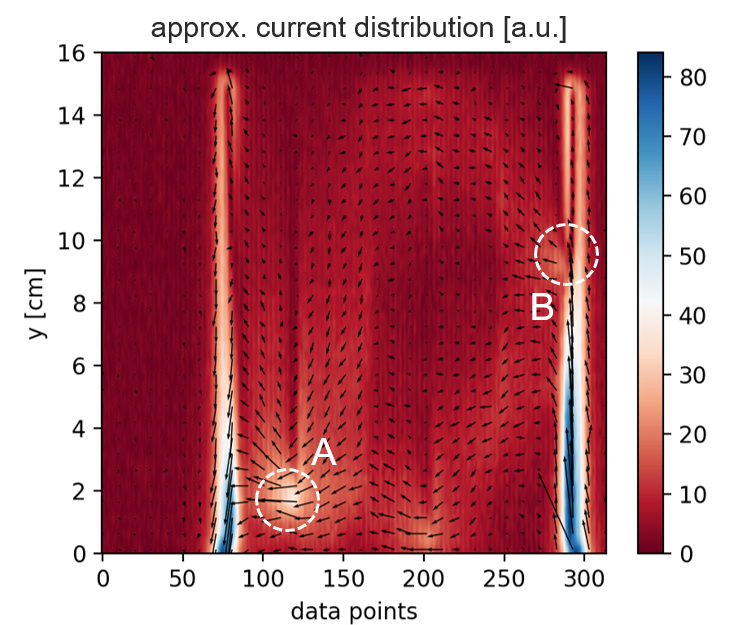
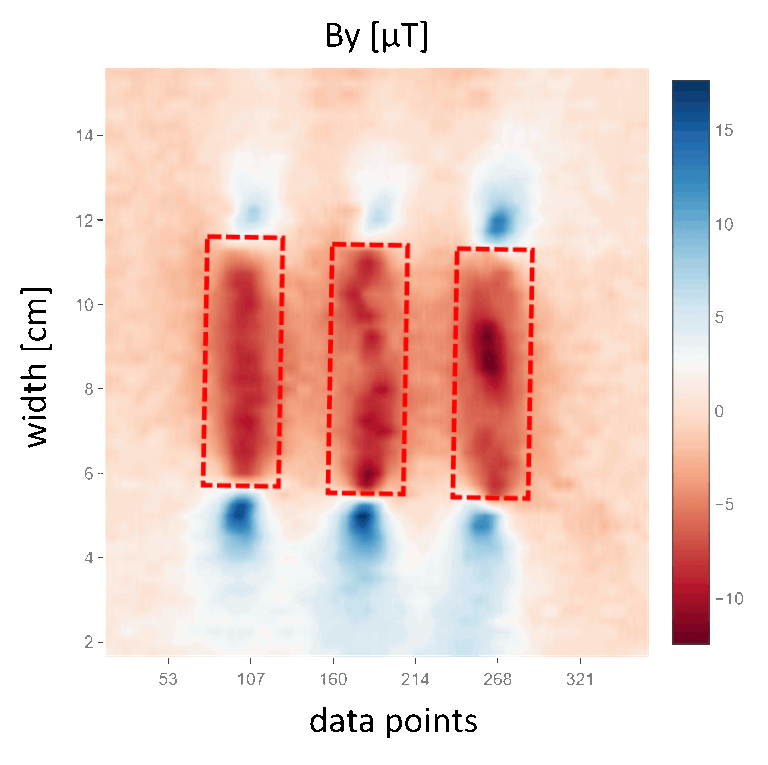
Shingled Modules (photovoltaics)
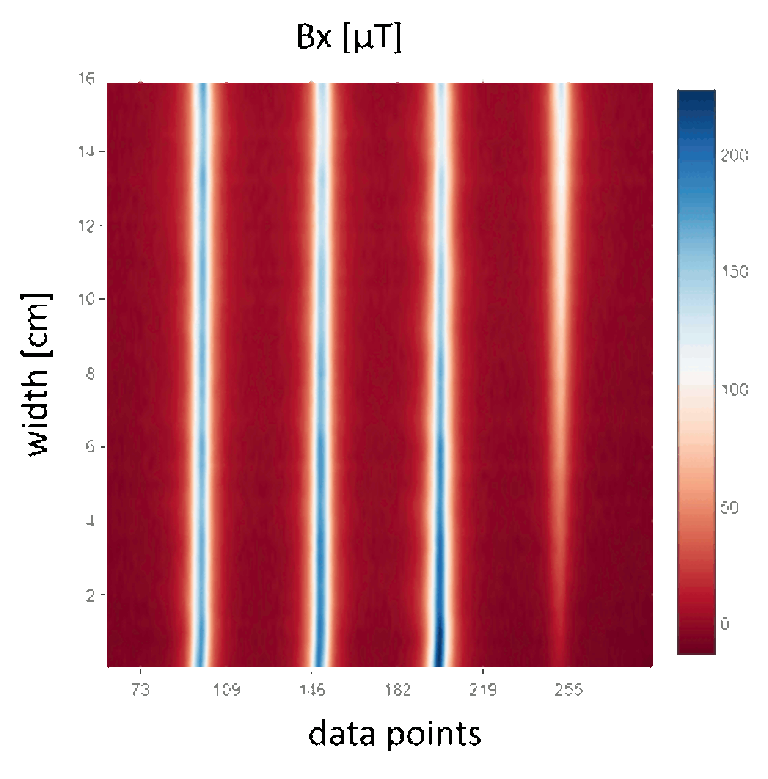
  • Measurement of the distribution of currents in connected Shingled Solar modules
  • Analysis of the quality of individual adhesive points by simply stroking the detector over
  • Quick detection of hidden shunts and other inhomogeneities
  • Optimization of series resistors and Shingle concepts
  • Use in production and free field


Cell Connectors (photovoltaics)

  • Measurement of a solar cell
  • The right busbar is not connected to the cross connector


Batteries (cylindrical cells)

  • Measurement of three cylindrical Li-Ion batteries during a charging process
  • The right battery shows an abnormality
  • The changed magnetic field indicates a locally changed current flow
  • MFI allows the detection of defects in accumulators


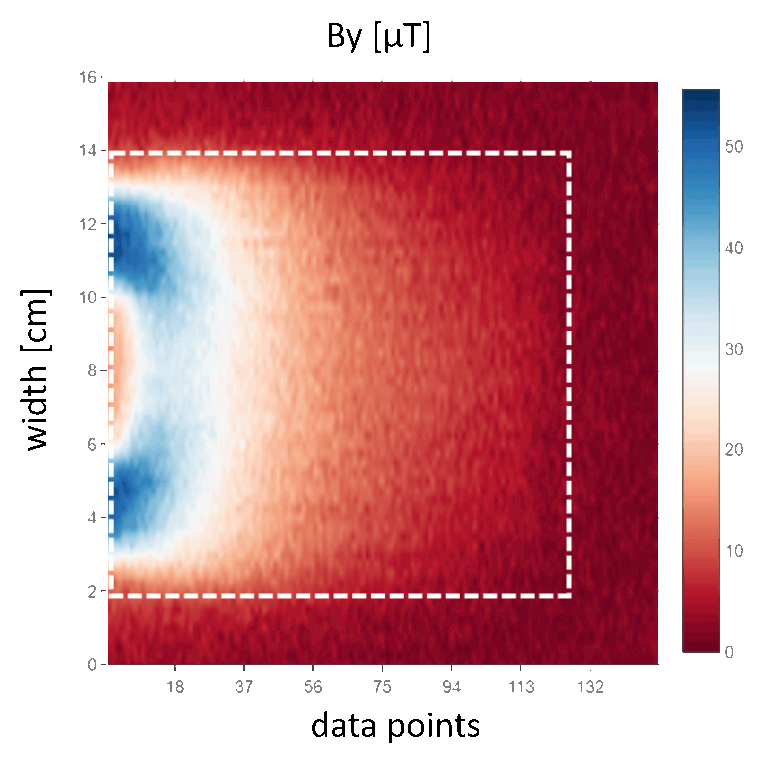
Batteries (pouch cell)

  • Measurement of a pouch cell during the charging process
  • MFI makes it possible for the first time to visualise the flow of electricity

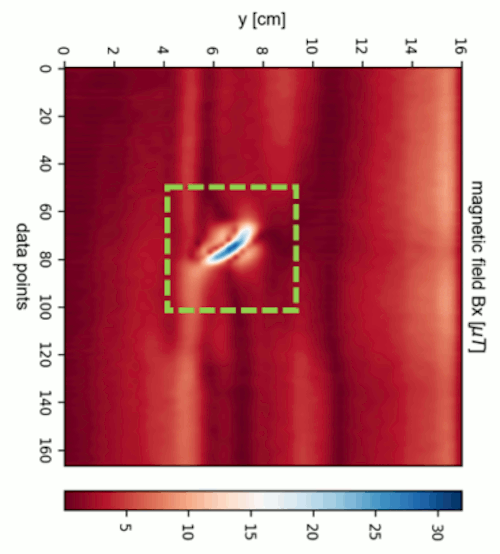
Cracks (metal processing)

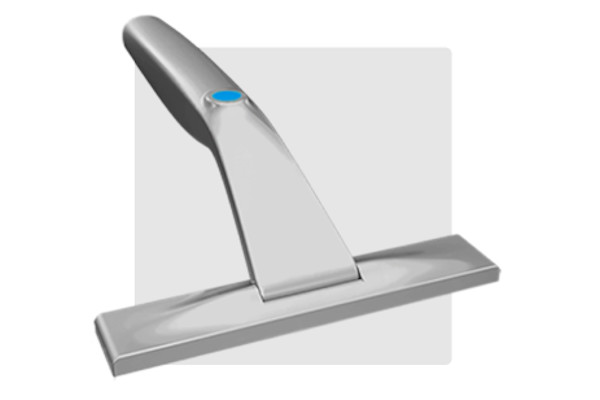
  • Measuring a crack in the metal with a handheld device
  • Measuring signal 3-4 orders of magnitude via signal-to-noise ratio
  • Live measurements possible

If you need a quote or would like more information on this product then please get in touch

References

The DENKweit B-LAB is used within world renowned companies and institutions.

The University of New South Wales (UNSW)

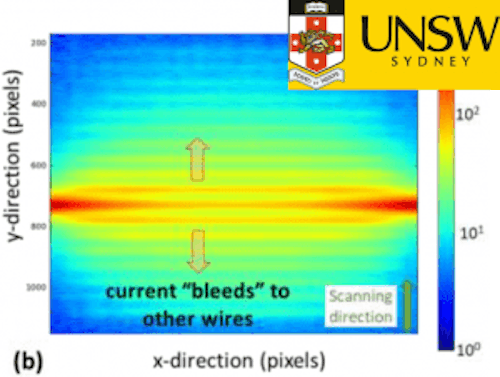
The University of New South Wales (UNSW) in Australia is working with a DENKweit B-TECH tool to investigate new types of contacts in order to find faults and to fully exploit the potential of new technologies.

This application involves smart-wire technologies, adhesive technologies and other PV contacting concepts for solar cells and modules.

If you would like to read about this in more detail please visit IEEE Xplore for an interesting publication here.
The Fraunhofer Center for Silicon Photovoltaics (CSP)

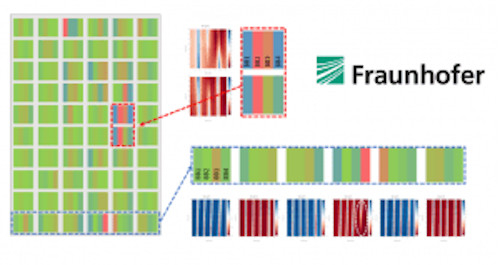
The Fraunhofer Center for Silicon Photovoltaics use the DENKweit B-TECH technology for the analysis of soldered connectors of entire solar modules. In addition, all other major electrical defects are located.
The Technical University of Clausthal

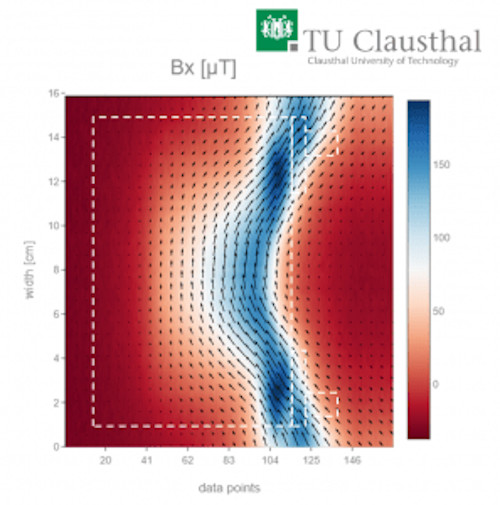
The Technical University of Clausthal is researching more safety and longer lifespans for batteries for electromobility. With the DENKweit technology, the TU gets a deep insight into the processes of batteries.
Technical Specifications

Minimum measurable current 2-5mA/cm2 (strongly dependent on sample and distance)
Maximum measurable current >500A
Spatial resolution 2.5mm in x, µm range in y and z
Resolution through different scan modes up to µm range
Individual sensor length length of system or up to 3m
Power supply 230V, 50/60Hz, 8A
Sensor 3-axis magnetic field sensor from B-Tech series

Other Products in Range

Other instruments in the Testing & Analysis range

Request Product Brochure
When is the best time to call
// Select all level-1 menu items const menuItems = document.querySelectorAll('.ubermenu-item-level-1'); // Apply 'show-me-active' to the first menu item and 'show-me-uber' to its submenu on page load if (menuItems.length > 0) { // Add 'show-me-active' to the first item menuItems[0].classList.add('show-me-active'); // Add 'show-me-uber' to the submenu within the first item (if it exists) const firstSubmenu = menuItems[0].querySelector('.ubermenu-submenu'); if (firstSubmenu) { firstSubmenu.classList.add('show-me-uber'); } } // Set up event listeners for each level-1 menu item menuItems.forEach(item => { item.addEventListener('mouseenter', function() { // Remove 'show-me-uber' class from all submenus document.querySelectorAll('.ubermenu-submenu').forEach(submenu => { submenu.classList.remove('show-me-uber'); }); // Remove 'show-me-active' class from all level-1 items menuItems.forEach(menuItem => { menuItem.classList.remove('show-me-active'); }); // Add 'show-me-active' class to the hovered item this.classList.add('show-me-active'); // Find the submenu within the hovered item and add 'show-me-uber' class const submenu = this.querySelector('.ubermenu-submenu'); if (submenu) { submenu.classList.add('show-me-uber'); } }); }); /* OPEN ONE MENU AT A TIME */ document.addEventListener('DOMContentLoaded', function () { console.log('Script Loaded'); // Check if the script is running const menuItems = document.querySelectorAll('.ubermenu-item-has-children'); // Select parent menu items const subIndicators = document.querySelectorAll('.ubermenu-sub-indicator'); // Select sub-indicators console.log('Sub Indicators:', subIndicators); // Log the sub-indicators to ensure selection is correct // Function to close all menus except the current one function closeOtherMenus(currentMenu) { console.log('Closing all other menus except:', currentMenu); menuItems.forEach(function (menuItem) { if (menuItem !== currentMenu) { console.log('Removing active class from:', menuItem); menuItem.classList.remove('ubermenu-active'); // Remove active class from other menus } }); } // Add click event to each sub-indicator subIndicators.forEach(function (indicator) { console.log('Attaching click event to:', indicator); // Log each sub-indicator being processed indicator.addEventListener('click', function (e) { console.log('Sub-indicator clicked:', this); e.stopPropagation(); // Prevent the event from bubbling to the document const parentMenuItem = this.closest('.ubermenu-item-has-children'); // Find the parent menu item console.log('Parent Menu Item:', parentMenuItem); // Log the parent menu item if (parentMenuItem) { // Check if parentMenuItem is valid if (parentMenuItem.classList.contains('ubermenu-active')) { console.log('Menu is already active, deactivating:', parentMenuItem); parentMenuItem.classList.remove('ubermenu-active'); } else { console.log('Activating menu:', parentMenuItem); closeOtherMenus(parentMenuItem); parentMenuItem.classList.add('ubermenu-active'); } } else { console.log('No parent menu item found.'); } }); }); // Add click event to the document to close menus when clicking outside document.addEventListener('click', function (e) { console.log('Document clicked. Closing all menus.'); // Check if the click is outside the menu if (!e.target.closest('.ubermenu')) { console.log('Click is outside the menu, closing all menus.'); menuItems.forEach(function (menuItem) { menuItem.classList.remove('ubermenu-active'); // Remove active class from all menus }); } }); });