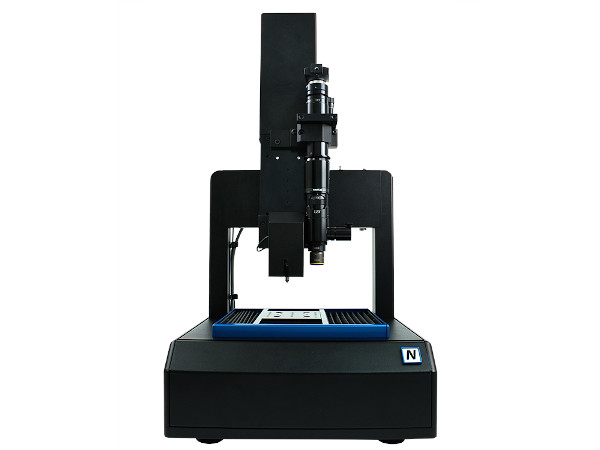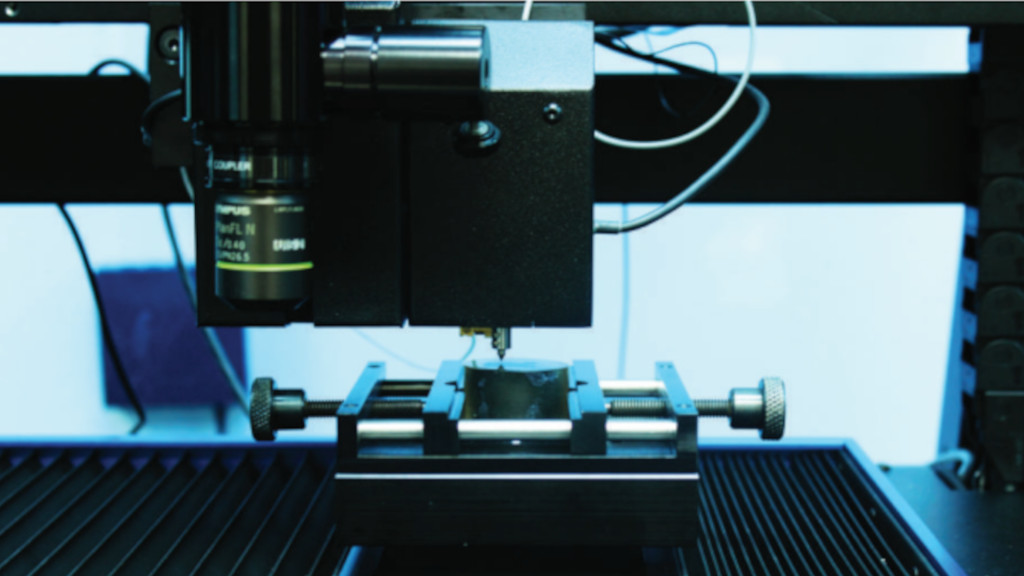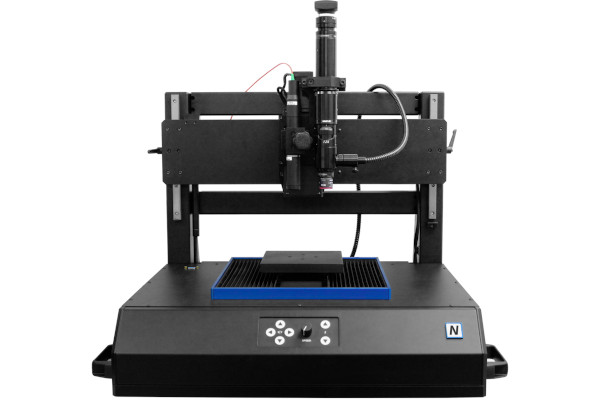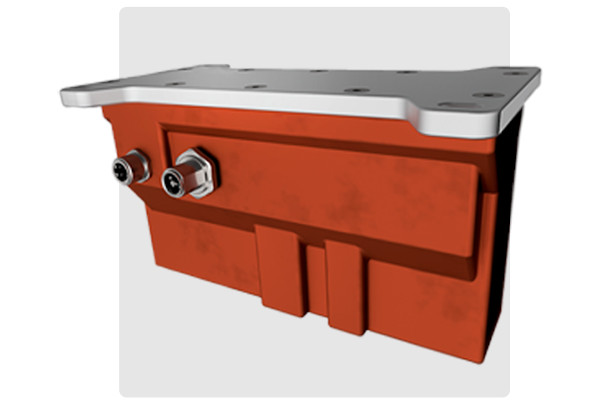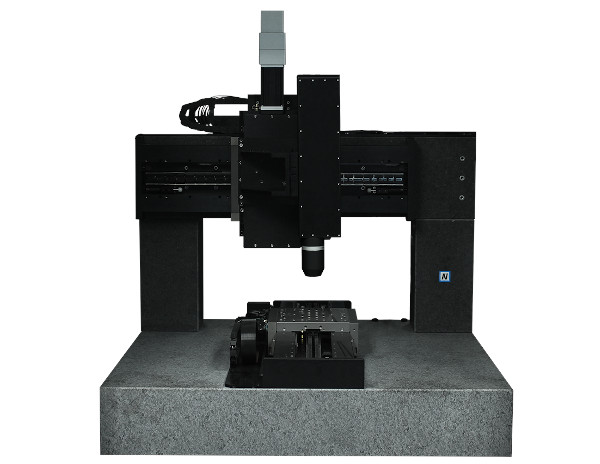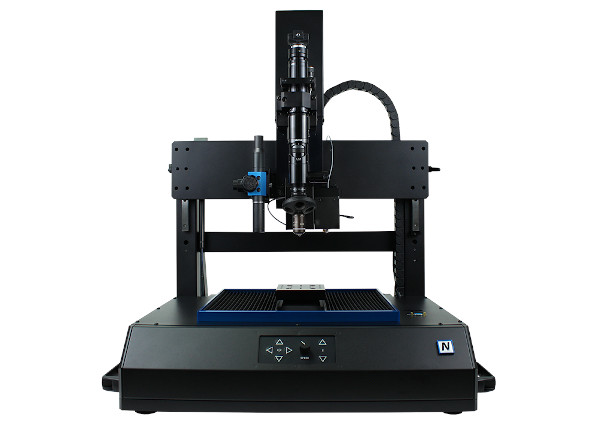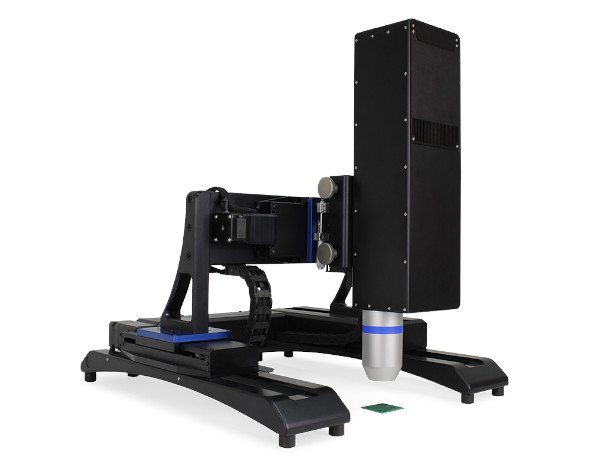
The CB500 mechanical tester from Nanovea is capable of nanoindentation or microindentation, with scratch, and friction testing on a compact benchtop platform.

It enables researchers to characterise materials from soft polymers to hard coatings, measuring properties such as hardness, elastic modulus, creep, stress–strain behaviour, scratch resistance and coefficient of friction.

True closed-loop feedback control, using independent load and depth sensors, ensures high accuracy and repeatability across nano or micro load ranges. A range of optional modules, including environmental control further extend the system’s capabilities.

The compact design of the CB500 with it’s 100 x 50mm stage make it ideal for labs where space is limited but there is no compromise on quality of testing.

Nanovea Inc are based in Irvine, a tech hub of Southern California. They have been redefining standards in quality control and materials development internationally for over a decade. Nanovea’s instruments can be found in renowned education and industrial organisations around the world.

Nanovea CB500 Mechanical Tester

Key Features

Wide Load Range

What is it: Covers nano or micro test loads from low nano up to 400N.
Why it matters: Configure the tool for your exact research requirements, whether testing soft polymers or hard coatings.

Scratch, Indentation and Wear Testing

What is it: A multi-technique platform for mechanical and tribological testing.
Why it matters: Perform complementary tests on the same sample improving efficiency and consistency. No need to buy separate hardness, scratch or friction testers.

High Accuracy Closed-Loop control

What is it: True closed-loop feedback using independent load and depth sensors.
Why it matters: Accurate, repeatable data you can trust where load programmed = actual load applied. Open loop can also be selected if needed.

Modular and Expandable Platform

What is it: Optional modules for environmental testing that can be added at the beginning or later.
Why it matters: Extend capability as requirements evolve without replacing the system. Don’t need it at the start? No stress, you can add it later.

Applications

Designed for labs that need high-quality mechanical testing in a compact footprint, the CB500 enables precise characterisation of materials using nanoindentation or microindentation, alongside scratch, wear, and friction testing. It is particularly well suited to focused studies, smaller samples, and environments where space and budget are key considerations.

Thin Films and Coatings

  • Nanoindentation or microindentation for measuring hardness and elastic modulus of thin films
  • Scratch testing to evaluate coating adhesion and identify critical failure points
  • Wear and durability testing of protective coatings under controlled conditions
  • Friction testing to assess surface performance and interaction

Surface Engineering

  • Evaluation of surface-treated and engineered layers using scratch and wear testing
  • Indentation testing to assess mechanical performance of coatings and modified surfaces
  • Analysis of coating failure mechanisms under controlled loading
  • Tribological assessment of surface treatments in a compact lab setup

Polymers and Soft Materials

  • Low-load nanoindentation for measuring hardness and elastic modulus of compliant materials
  • Creep, relaxation, and viscoelastic behaviour under controlled conditions
  • Friction and wear testing of elastomers and soft coatings
  • Efficient testing of small or limited material samples

Metals and Bulk Materials

  • Microindentation or nanoindentation for hardness and elastic modulus measurement
  • Stress–strain behaviour and yield estimation from indentation data
  • Wear and friction testing for evaluating surface durability
  • Ideal for routine testing where sample size and space are constrained

Organic Samples

  • Low-force nanoindentation for biological and organic samples
  • Time-dependent deformation analysis including creep and relaxation
  • Mechanical characterisation of delicate structures without excessive damage
  • Suitable for research environments with limited space or specialised setups

Tribology 

  • Coefficient of friction measurement using integrated friction testing
  • Scratch testing to assess surface damage and resistance to wear
  • Controlled wear testing for comparative material studies
  • Correlation of friction and wear behaviour with mechanical properties

If you need a quote or would like more information on this product then please get in touch

Test Modes & Options

The CB500 Nanoindentation Or Microindentation, Scratch and Wear Tester has a wide range of testing capabilities all with high accuracy and repeatability.

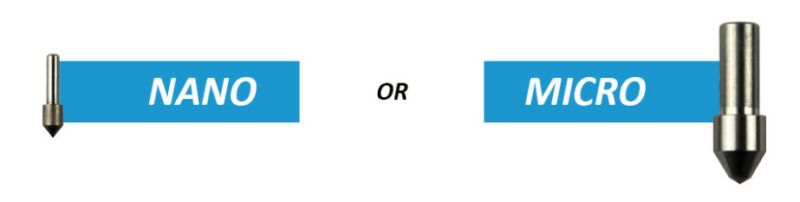
Available for testing in Nano or Micro load ranges.
Nanoindentation or Microindentation, Scratch Tester

Indentation Testing


Hardness & Elastic Modulus

Instrumented Indentation is a modern method used to measure hardness and elastic modulus of materials.

A hard tip of a pre-defined geometry is pressed into a material while continuously measuring the applied load and indentation depth using highly sensitive sensors.Tests can consist of single indents, or maps to measure distribution of properties across a sample.

Nanoindentation & Microindentation Hardness Mapping

Fracture Toughness

Indentation fracture toughness is a way to estimate how resistant a material is to cracking by observing and measuring the cracks that form under a controlled indentation.

Acoustic emission can be used to provide additional data and to help understand what is happening unseen beneath the surface during the test.

Nanoindentation & Microindentation Fracture Toughness

Yield Strength and Fatigue

Yield strength is the stress at which a material begins to deform plastically and it is calculated during the same testing process as hardness.

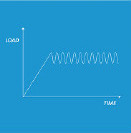
Fatigue is the damage and eventual failure caused by repeating loading cycles. Indentation fatigue testing tracks how a material’s response evolves under repeated small-scale loading to assess its resistance to fatigue damage.

Nanoindentation & Microindentation Yield strength and fatigue

Creep and Relaxation

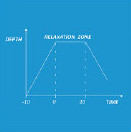
Creep is the time-dependent increase in deformation under a constant load. When performing instrumented indentation on a Nanovea tool, you can program the tool to hold the maximum load for a set duration and measure how the indentation depth continues to increase over time.

Stress relaxation is the decrease in stress under constant deformation. In instrumented indentation you can hold the indenter at a constant depth to observe how the required load decreases over time.

Nanoindentation & Microindentation Creep and relaxation

Stress vs Strain

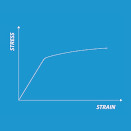
A stress-strain curve describes how a material deforms under load and is inferred from the load-displacement curve during instrumented indentation.

Models such as Oliver-Pharr can be used to estimate this equivalent stress-strain response.

Nanoindentation & Microindentation Stress vs Strain

Loss and Storage Modulus

Loss modulus represents the viscous response which is how much energy is lost during deformation.

Storage modulus represents the elastic response which is how much energy the material stores and gives back.

This is especially useful for polymers, coatings and viscoelastic materials.

Nanoindentation & Microindentation Loss & Storage Modulus


Scratch Testing


Cohesive Failure

Cohesive failure occurs within a coating or surface itself in the form of cracks or chips. It is when a coating breaks internally but does not detach from the surface. Nano and Micro Cohesive Scratch Failure

Adhesive Failure

Adhesive failure is when a coating is delaminated from the surface. It usually means that the bonding between a coating and the surface is not strong enough for the application. Nano & Micro Scratch Adhesive Failure

Scratch Hardness

Scratch hardness is a measure of a material’s resistance to permanent deformation during a scratch. It is particularly useful for coatings and surface treatments. Nano & Micro Scratch Hardness


Friction Testing


Coefficient of Friction

The coefficient of friction is a measure of how much a material resists sliding against another surface. It is calculated by friction tables that measure the lateral force applied to the tip during a test and the normal force of the tip being pressed into the surface. Nano & Micro Coefficient of Friction


Environmental Options


Environmental modules can be added when the instrument is first built, or later on site allowing users to limit initial spend and utilise budgets available later (excluding vacuum which must be supplied at the start).

High Temperature

Controlled temperatures up to 600°C.
Tip and sample inside oven for increased accuracy.
Designed with MACOR with low thermal expansion coefficient of material of <10-6/°C.
High temperature Nanoindentation & Microindentation, Scratch and Wear Testing

Low Temperature

Enclosed peltier cooling system for increased accuracy.
Down to -10°C / <-40°C lower customer temperature.
Tip and sample inside enclosed environment for increased accuracy.
Low temperature Nanoindentation & Microindentation, Scratch and Wear Testing

Liquid

Liquid cup with custom height
Heated liquid version available
Nanoindentation & Microindentation, Scratch and Wear Liquid Testing

Humidity

Indenter and sample enclosed in humidity chamber.
Humidity control down to below 5% and up to dew point.
Humidity Nanoindentation & Microindentation, Scratch and Wear Testing

Vacuum

Full mechanical testing in vacuum environment.
Contact us for more information.
Vacuum Nanoindentation & Microindentation, Scratch and Wear Testing


Optical Options

During the build there are optical options that can be added to the CB500 mechanical tester.

Video Microscope Imaging

The addition of a video microscope allows the user to visually examine their sample before selecting where to make a mechanical test. It is also used to image scratches for analysis within the tool software.

Objective Magnification Up to 100x
Colour Video Camera
 1200 x 1600
Calibration With Indenter Accurate to within under 0.2µm of indenter position
Image Stitching Large area stitching capability

Technical Specification

Base Specifications
X-Y Stage Travel 100mm x 50mm
XY Lateral Resolution 0.1µm
Z Motorized Approach 50mm
Test Modules
Nano Module Specification Micro Module
Indentation, scratch, wear & friction Modes of Testing Indentation, scratch, wear & friction
80 | 400 | 1800 | 4800mN Load Range 20 | 40 | 200 |400N
250 | 1500µm Depth Range 1mm
40 | 400 | 1800mN Friction Range 20 | 200N
150-400kHz Acoustic Emission Frequencies 150 – 400kHz
0.1 to 100Hz DMA/CSM Frequencies N/A
5 minutes for 100 indents Fastmap 12 minutes for 100 indents
275° | 450°C High Temperature 275° | 450° | 600°C
Down to -10°C | <-40°C Low Temperature Down to -10°C | <-40°C
5% to Dew Point Humidity 5% to Dew Point
Yes Liquid Yes
Values separated by | indicate different build options.

FAQ

Who is this system for?
The CB500 is primarily for researchers who want to work across multiple applications in nanoindentation or microindentation, scratch and/or friction testing. It is for researchers looking for a compact tool that is powerful but compact.

How does the CB500 compare to the PB1000?
There are two core differences between the CB500 and the PB1000. The first is stage size with the CB500 having a more compact stage of 50mm x 100mm compared to 150mm x 200mm on the PB1000. The second is that the CB500 can be configured to work in the Nano range or the Micro range whereas the PB1000 can be configured to work in both. The CB500 is an excellent tool if you want a nano tester or a micro tester. If you want both, then the PB1000 will give you that, although if you have budget and you prefer a benchtop tool then you could purchase both a nano CB500 and a micro CB500.

What is a hardness tester?
A hardness tester is a device used to measure how resistant a material is to deformation by pressing an indenter into its surface under a controlled force. By assessing the material’s response to this force, it provides a hardness value that indicates properties such as strength, wear resistance, and durability. Hardness testing is widely used in quality control, research, and manufacturing to ensure materials meet required performance standards.

What is instrumented indentation?
Nanovea tools use instrumented indentation when testing materials. Instrumented indentation is an advanced testing method that measures a material’s mechanical properties by continuously recording force and displacement as an indenter is pressed into and withdrawn from the surface. Instead of relying only on the final impression, it analyses the full loading and unloading curve to determine hardness as well as additional properties such as elastic modulus. This approach delivers more detailed and precise insight into material behaviour, making it ideal for coatings, thin films, and high-precision applications.

What is a scratch tester?
A scratch tester is a device used to evaluate a material or coating’s resistance to scratching, adhesion, and surface damage. It works by drawing a stylus across the surface under a controlled and progressively increasing load, while monitoring the material’s response. By identifying the point at which damage, cracking, or coating failure occurs, scratch testing provides valuable insight into durability, coating adhesion, and overall surface performance, making it widely used in coatings development, quality control, and materials research.

If you need a quote or would like more information on this product then please get in touch

Other Products in Range

Other instruments in the Nanovea range.

Request Product Brochure
When is the best time to call